
The UK Intellectual Property Office (UKIPO) has issued important new guidance for trademark applicants following a Supreme Court judgment in the case of SkyKick UK Ltd and another v. Sky Ltd and others.
The updated Practice Amendment Notice (PAN 1/25) clarifies what is expected when filing specifications and outlines changes to examination practices. These changes will take effect immediately.
Important changes trademark applicants and their representatives need to know
The Supreme Court judgment addresses bad faith in trademark applications, particularly concerning overly broad specifications where applicants have no intention to use the mark across all the claimed goods or services.
Examiners will now actively consider whether specifications are “manifestly and self-evidently broad” and may raise bad faith objections during the examination process.
What you need to do
Trademark applicants should:
- Ensure specifications represent fair and reasonable claims for their business
- Be cautious when filing for large numbers of goods and services across multiple classes
- Consider whether broad terms like “computer software” or “clothing” truly reflect intended use or whether sub-categories are more appropriate
- Be ready to explain their commercial reasons if challenged on the scope of an application.
What to expect during examination
If examiners raise a bad faith objection, applicants will have two months to respond by either:
- Providing an explanation of their commercial reasons for the broad specification
- Restricting the goods/services to reflect their business more appropriately.
Certain applications will automatically trigger objections, including claims covering all 45 classes or all goods in Class 9. (Class 9 covers a significant range of goods related to technology, science, information processing, and software.)
However, there will be other scenarios where examiners may raise objections, which will be dealt with on a case-by-case basis. The UKIPO aims to strike a pragmatic balance, and the focus will be on manifestly and self-evidently broad specifications.
The UKIPO’s Deputy CEO and Director of Services, Andy Bartlett said: “Following the Supreme Court’s judgment in the ‘Skykick’ case, we are issuing guidance to provide greater clarity and certainty for trademark applicants and their representatives.
“The ruling represents a significant development in trademark law, and this Practice Amendment Notice explains what is expected from applicants and how our examination practices will change as a result.
“Understanding these changes will help our customers prepare appropriate specifications and avoid potential challenges and unnecessary delays in the application process.”
Customers requiring further information about the new guidance can get in touch at [email protected].
When applying to register a trademark, customers may wish to seek professional advice from a Chartered Trade Mark Attorney.
For more information, read the full Practice Amendment Notice (PAN 1/25).
You may also like…
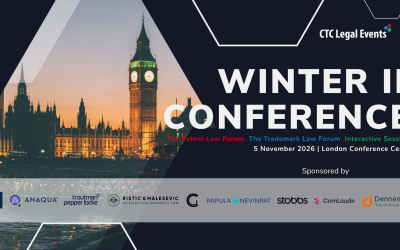
Winter IP Conference 2026: 5 November, London UK
After two highly successful and well-regarded annual events, we’re thrilled to announce the Winter Intellectual...

Japan’s Supreme Court rules copying unprotected works can still constitute a tort
Japan’s top court has upheld approximately JPY 169 million in damages against a website operator that reproduced and...

Columbia Pictures loses EU trademark challenge to GHOST BUSTER mark
The Ghostbusters franchise owner has reportedly failed to block a Dutch inventor’s trademark for lighting products,...
Contact us to write for out Newsletter