
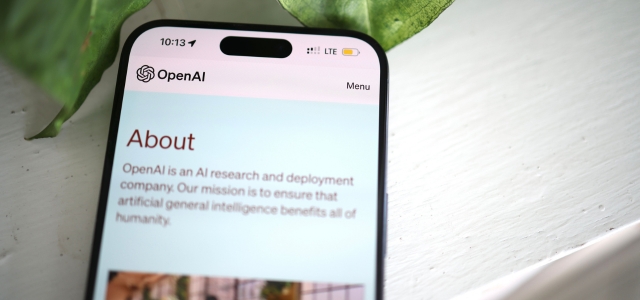
The publishers allege that OpenAI used hundreds of thousands of articles without permission to train its AI models, adding a further challenge to the legal basis for commercial AI development.
USA TODAY Co. and affiliated newspaper publishers have sued OpenAI in federal court in Manhattan, alleging that the company infringed their copyrights by using their journalism to train artificial intelligence (AI) models without authorization.
Filed October 8, 2026, in the US District Court for the Southern District of New York, the complaint seeks damages in excess of $250 million and a court order blocking the alleged infringement.
The publishers allege that OpenAI copied hundreds of thousands of articles and other materials from their publications to train the technology behind ChatGPT. The case, USA TODAY Co. v. OpenAI Foundation, adds to a growing body of litigation over whether AI developers can use copyrighted works to build commercial systems without obtaining licenses from rights holders.
19 publications involved
The lawsuit involves content published across 19 publications owned by the digital publisher, including USA TODAY, The Arizona Republic, the Detroit Free Press, and the Indianapolis Star.
According to reporting by Bloomberg Law, the complaint alleges that OpenAI accessed the publishers’ copyrighted material to train consumer-facing products such as ChatGPT. The plaintiffs also allege that OpenAI’s internal communications show that the company deliberately targeted news content and knew its models could reproduce that material. The publishers contend that the use of their journalism has caused continuing harm to their businesses.
These allegations form part of a broader dispute over the commercial use of copyrighted material in generative AI. Publishers argue that developing AI products using their work without permission deprives them of control over their content and the opportunity to negotiate licensing arrangements. The claims remain allegations and have not been established in court. OpenAI did not immediately respond to Reuters’ request for comment on the complaint.
Copyright and the fair-use question
The case adds to the legal pressure on AI developers over the sourcing of training data and the use of copyrighted material in machine-learning systems. OpenAI and other technology companies have argued in related litigation that using copyrighted works to train AI models can constitute fair use under US copyright law. That defense requires a fact-specific assessment, rather than a blanket determination that all AI training is lawful or infringing.
The publishers’ claims also raise questions about the relationship between model training and the material produced in response to users’ prompts. Whether a model’s outputs reproduce protected expression, and whether those outputs compete with the original works, may involve different legal considerations from the initial use of material during training.
The distinction is important for AI developers and intellectual property owners alike. The use of copyrighted works in training datasets does not, by itself, resolve every question concerning the legality of a model’s outputs.
A growing challenge for AI developers
The USA TODAY lawsuit joins a series of copyright actions brought by publishers and other rights holders against AI companies.
OpenAI and Microsoft are already defending related claims in Manhattan brought by prominent authors and news organizations, including The New York Times. Other publishers have also pursued litigation over the use of their work in AI training. The latest complaint will add to scrutiny of how AI developers obtain training material, what internal records reveal about their practices, and whether their use of protected content requires licensing.
For rights holders, the proceedings may help clarify the legal boundaries between using copyrighted material to develop AI systems and reproducing protected expression through those systems. For developers, the dispute reinforces the importance of assessing copyright risks when acquiring data and designing commercial AI products.
The case is at an early stage, and its allegations have yet to be tested. Its significance will depend in part on the evidence supporting the publishers’ claims and how the court addresses the relationship between AI training, copyright infringement, and fair use.

Written by Elizabeth Jordan
Senior Industry Engagement Manager, CTC Legal Media

You may also like…

Winter IP Conference 2026: 5 November, London UK
After two highly successful and well-regarded annual events, we’re thrilled to announce the Winter Intellectual...

EU General Court rejects bad-faith and copyright challenge to lightoptics trademark
The ruling highlights the evidentiary burden on businesses seeking to invalidate an EU trademark based on earlier...

Meloni’s voice trademark highlights new frontier in AI-era brand protection
Italy’s prime minister has applied to register a four-second recording of her voice as an EU sound mark. The filing...
Contact us to write for out Newsletter