
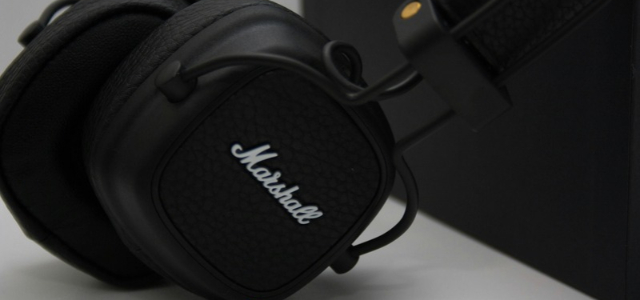
The Intellectual Property Enterprise Court has ruled that an online retailer infringed Marshall’s trademarks by selling counterfeit Major V headphones through Amazon UK.
Marshall Group AB and Marshall Amplification plc have secured a trademark infringement judgment against OWGH Limited after the UK Intellectual Property Enterprise Court found that the retailer sold counterfeit Marshall-branded headphones without authorization.
In Marshall Group AB v. OWGH Limited [2026] EWHC 2753 (IPEC), handed down on October 30, Deputy High Court Judge Charlotte May KC found that OWGH infringed Marshall’s registered trademarks by offering and selling counterfeit Major V headphones through Amazon UK.
The court found infringement under Section 10(1) of the Trade Marks Act 1994, which concerns the unauthorized use of an identical trademark for identical goods. The registered trademarks are owned by Marshall Amplification plc, with Marshall Group AB acting as its UK licensee. The judgment followed a trial on October 2. OWGH did not attend or have legal representation at the hearing.
Counterfeit headphones sold through Amazon
The dispute concerned Marshall Major V Bluetooth headphones offered for sale by OWGH on Amazon UK. Marshall conducted a series of test purchases and examined the products, identifying differences between the headphones and genuine Marshall goods. These included discrepancies in packaging, product details, and the presentation of the brand.
The court also found that the serial numbers on the test purchases were absent from Marshall’s internal records system, which tracks genuine products. Judge May described the evidence supporting the conclusion that the headphones were counterfeit as overwhelming.
OWGH had argued that it purchased the products from Romanian wholesalers AK Partners Europe SRL and KA Wholesalers Limited. However, it could not establish where those suppliers had obtained the goods.
The retailer also suggested that Amazon could have shipped products from a different source. The court rejected that argument, finding that the evidence established that the test purchases came from OWGH.
Retailer failed to prove authorization
A central issue was whether the headphones had previously been placed on the market in the UK or European Economic Area by Marshall or with its consent. OWGH argued that Marshall products were widely available through authorized and third-party resellers, including on Amazon and through major retailers, and that its supplier would not have been able to obtain the goods otherwise.
The court rejected this reasoning.
Judge May held that the relevant question was whether Marshall had consented to the marketing of the specific goods in dispute, rather than whether genuine products of the same type were generally available. The burden of proving consent rested with OWGH, which failed to provide evidence establishing that the headphones had been placed on the UK or EEA market by Marshall or with its authorization.
The court therefore found that infringement was established both because the products were counterfeit and because OWGH could not demonstrate that the specific goods had been marketed with Marshall’s consent.
Judgment entered for Marshall
The court entered judgment for Marshall under Section 10(1) of the Trade Marks Act 1994. Marshall’s alternative claim under Section 10(2), concerning infringement through a likelihood of confusion, was not addressed. The claimants also did not pursue their passing-off claim at trial.
The court did not determine the final form of the order, stating that counsel would be heard if it could not be agreed. The decision highlights the importance of trademark owners’ ability to protect their brands against counterfeit goods sold through online marketplaces. It also underscores that retailers must be able to demonstrate the authenticity and authorized supply of products they offer for sale.

Written by Elizabeth Jordan
Senior Industry Engagement Manager, CTC Legal Media

You may also like…

Winter IP Conference 2026: 5 November, London UK
After two highly successful and well-regarded annual events, we’re thrilled to announce the Winter Intellectual...

Temu joins oriGIn to advance online protection of geographical indications
DUBLIN, November 2, 2026 - Global e-commerce platform Temu joined oriGIn, the global alliance...

Meta’s AI copyright trial set for May 2027 as works list remains unsettled
A US federal court has scheduled a May 3, 2027, trial in Entrepreneur Media’s copyright lawsuit against Meta, as the...
Contact us to write for out Newsletter