
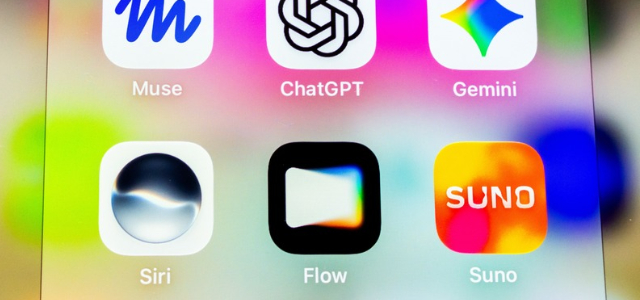
Rights holders connected to Elvis Presley and Eminem have filed separate copyright infringement lawsuits against AI music generator Suno, alleging that the company used hundreds of protected musical compositions to train its artificial intelligence models without authorization. The Elvis Presley action also invokes Tennessee’s ELVIS Act, raising fresh questions about the protection of artists’ identities against AI-generated voice imitation.
The lawsuits were filed November 6 in the US District Court for the Northern District of California. The plaintiffs allege that Suno unlawfully reproduced copyrighted music to develop its AI music-generation technology and subsequently enabled users to generate content that imitates established artists.
The two cases, Elvis Presley Enterprises, LLC et al. v. Suno, Inc. (No. 3:26-cv-13398) and Eight Mile Style, LLC et al. v. Suno, Inc. (No. 3:26-cv-13399), represent another significant challenge to the use of copyrighted music in generative AI systems.
The Elvis Presley action was brought by a group of music and intellectual property rights holders, including Elvis Presley Enterprises, ABG EPE IP LLC and Raleigh Music Publishing. The complaint alleges that Suno used copyrighted compositions without permission to train its AI models and enabled users to generate recordings imitating Presley’s distinctive voice.
The plaintiffs identify 859 copyrighted musical compositions allegedly used without authorization. They also point to examples of AI-generated recordings that they claim reproduce elements of Presley’s voice and musical identity.
ELVIS Act brings personality rights into focus
Beyond copyright infringement, the Presley plaintiffs are relying on Tennessee’s Ensuring Likeness, Voice and Image Security Act, commonly known as the ELVIS Act.
Introduced in 2024, the legislation strengthened existing protections against the unauthorized commercial exploitation of an individual’s name, image, voice, and likeness. It specifically addresses the use of artificial intelligence to reproduce an individual’s voice or likeness without authorization.
The complaint alleges that Suno violated the legislation by making AI-generated versions of Presley’s voice and likeness available without permission. It also raises claims under Tennessee common law concerning the right of publicity.
The plaintiffs argue that Suno’s technology enables users to generate music that imitates the late singer’s recognizable voice, effectively commercializing elements of his identity without authorization from the relevant rights holders.
Elvis Presley Enterprises is seeking more than $50 million in damages in connection with its publicity-rights claims. Separately, the copyright complaint seeks statutory damages of up to $128.85 million for the alleged infringement of the 859 musical compositions.
The case could therefore become an important test of how personality rights legislation applies to generative AI platforms, particularly where a technology enables users to reproduce the recognizable voice of a deceased artist.
Eminem’s publisher targets unauthorized use of 269 compositions
The second lawsuit was brought by Eight Mile Style and Martin Affiliated LLC, the music publishing companies associated with Eminem’s catalog. Eight Mile Style controls and administers rights in 269 musical compositions associated with the rapper, including Lose Yourself, The Real Slim Shady and Stan. Eminem himself is not a party to the proceedings.
The complaint alleges that Suno used these copyrighted compositions to train its AI music generator without authorization and subsequently enabled users to produce music reproducing elements of the protected works.
It also alleges that Suno circumvented technological protection measures when obtaining copyrighted material from online platforms and removed or altered copyright management information associated with the works.
Eight Mile Style and Martin Affiliated are seeking statutory copyright damages of $40.35 million, alongside injunctive relief and other remedies.
The two lawsuits therefore raise concerns extending beyond the use of copyrighted material in AI training. Both also challenge the methods allegedly used to obtain protected music and the ability of AI platforms to generate outputs that reproduce recognizable elements of existing works.
Suno disputes allegations as AI music litigation grows
Suno has rejected the allegations, maintaining that its platform is designed to help users create original music rather than exploit individual artists or their work.
A company spokesperson said Suno does not allow prompts using specific artists’ names or song titles and works with third-party providers to screen uploaded audio files and lyrics for potential misuse. The company added that it prohibits unauthorized use of artists’ work and is continuing to strengthen safeguards on its platform.
The latest lawsuits add to a growing wave of copyright litigation involving AI-generated music. Suno has previously faced claims from major record labels, including Universal Music Group and Sony Music Entertainment, over the use of copyrighted recordings in AI training. Warner Music Group settled its separate lawsuit and subsequently entered into a licensing agreement with the company.
The Presley rights holders have also separately sued AI company Anthropic over the alleged use of Elvis Presley compositions to train its Claude AI system. For music publishers, recording companies and artists’ representatives, the proceedings raise increasingly important questions about the boundaries of copyright protection and personality rights in the development of generative AI.
As AI music platforms become more sophisticated, the distinction between generating new creative works and commercially exploiting recognizable elements of existing artists’ identities is likely to remain a central issue in disputes over licensing, ownership and enforcement.

Written by Elizabeth Jordan
Senior Industry Engagement Manager, CTC Legal Media

You may also like…
Designers to get stronger and simpler protection in major reforms
Changes will help smaller businesses safeguard their work and modernize design protection The Government has announced...
Anand and Anand successfully represents The Boeing Company in trademark opposition against “RK BOEING”
New Delhi, November 5, 2026 - Anand and Anand has successfully represented The Boeing Company in opposition...
Anand and Anand secures favorable trademark opposition decision for Baidyanath in China
New Delhi, November 5, 2026 - Anand and Anand represented Shree Baidyanath Ayurved Bhawan Pvt. Ltd. (Baidyanath) in...
Contact us to write for out Newsletter