

The Delhi High Court’s decision in Hindware v. Google marks an important development in the intermediary liability jurisprudence. By holding Google liable for trademark infringement through its AdWords program, the Court has narrowed the protective umbrella of “safe harbor” under Section 79 of the Information Technology Act, 2000. What makes this case truly significant is the Court’s distinction from earlier landmark rulings that had long defined intermediary liability.
The crux of the Hindware case
Hindware (a bathware company) discovered that competitors were bidding on its trademark HINDWARE as a keyword in Google Ads. This meant that when users searched for “Hindware,” they were diverted to rival products. The Court ruled that even the invisible use of a trademark as a keyword trigger constitutes infringement under the Trade Marks Act, 1999. The Court ordered Google to stop auctioning Hindware’s mark and pay damages. The Court extensively analyzed whether:
- the use of trademarks as keywords amounts to infringement under Section 29 of the Trade Marks Act; and
- Google’s role in the AdWords ecosystem deprives it of intermediary protection, and
- Google’s keyword suggestion tools, auction systems, monetization model, and advertising ranking process make it an active participant in attracting liability and disqualifying it from claiming intermediary protection.
How the Court distinguished earlier decisions
A notable aspect of the judgment is the manner in which the Court distinguishes prior keyword advertising jurisprudence, signaling a shift from a platform-neutral approach towards a closer examination of an intermediary’s commercial involvement in and contribution to infringing activity. Earlier cases protected intermediaries because they were viewed as neutral actors. In the Hindware case, the Court focused on Google’s active commercial involvement.
Set out below is a brief overview of the earlier decisions that shaped the intermediary liability landscape, together with our comments on how the Hindware decision has altered the accepted understanding of intermediaries as neutral parties.
- In Shreya Singhal v. Union of India (2015), the decision recognized broad safe-harbor protection for intermediaries acting as neutral conduits. In Hindware, the Court examined whether Google could claim that status at all. By emphasizing Google’s active role in the AdWords ecosystem, the Court suggested that intermediary protection becomes increasingly difficult to justify where a platform actively facilitates and profits from the impugned activity.
- In Kent RO Systems v. Amit Kotak (2017), the decision represented a more restrained approach. The Court was hesitant to treat the invisible use of a trademark as a keyword, or as constituting trademark infringement, particularly where the mark was not visibly displayed to consumers. The emphasis remained on the traditional understanding of trademark use as something perceptible to the public. In Hindware, the Court departed from this reasoning by recognizing that trademark exploitation in the digital environment often occurs through invisible technological mechanisms. The Court accepted that a trademark may be commercially exploited even when it is used solely as a backend trigger for advertisements. The decision, therefore, moves beyond the visible-versus-invisible distinction and focuses instead on the commercial function of the keyword.
- In Christian Louboutin SAS v. Nakul Bajaj (2018), the Delhi High Court held that an e-commerce platform could not claim intermediary protection when it actively promoted, advertised, and facilitated the sale of infringing products. The Court distinguished passive hosting and active participation. In Hindware, this principle is effectively transposed from e-commerce marketplaces to digital advertising platforms. The Court applied the same “active role” analysis to Google’s AdWords ecosystem and examined whether Google’s involvement extended beyond mere provision of technological infrastructure. After analyzing Google’s participation in the AdWords Program, the Court found Google to be an active participant, thereby suggesting that active exploitation of trademark value may attract liability even where the platform itself is not the direct seller of goods.
- In DRS Logistics Pvt. Ltd. v. Google LLC (2021), the Court recognized that use of keywords could, in certain circumstances, amount to infringement, particularly where confusion was established. However, the decision remained silent on the extent to which invisible keyword use would amount to use under the Act. In Hindware, the Court took this one step further and adopted a more definitive position. Rather than treating keyword advertising as an area of uncertainty, it expressly recognizes that use of a trademark as a keyword may itself constitute actionable use. The judgment therefore reduces much of the ambiguity that remained following DRS Logistics and places greater emphasis on the commercial exploitation of trademark goodwill through keyword bidding. The result is a stricter approach towards platforms that profit from trademark-triggered advertising.
- In MakeMyTrip India Pvt. Ltd. v. Google LLC (2022), following the principle that trade marks must be visible to the public and cause confusion, the decision held that invisible keyword bidding would not amount to “use” in trade. In Hindware, the Court consciously moves away from this approach. It treats invisible keyword triggers as a form of trademark use because they perform an important commercial function. The Court opined that they direct consumers searching for a particular brand towards competing products and services. The Court therefore shifted attention away from the mark’s visibility and towards the economic reality of how keyword advertising operates. It further emphasizes that, in Hindware, the keyword auctioned is a coined term and has been judicially recognized as a well-known mark. The Court, relying on the mark’s strength, held that it deserved greater protection.
The takeaway
Taken together, the Court’s treatment of these authorities reveals a common theme. Earlier decisions afforded intermediaries’ substantial protection because they were viewed as neutral facilitators of third-party activity. Hindware, however, reflects a growing judicial willingness to examine how platforms operate in practice. The decision suggests that where an intermediary actively facilitates, controls, and commercially benefits from the exploitation of another’s trademark, it may no longer be able to rely on traditional assumptions that grant intermediary immunity. The ruling signals a decisive move towards stricter accountability for intermediaries, suggesting that platforms can no longer rely on invisibility or ambiguity.
What does this decision mean for brand owners?
For brand owners, the decision offers stronger protection against the unauthorized use of their trade marks as advertising keywords, particularly where the marks are coined, distinctive, or well known. It indicates that competitors may no longer be permitted to bid on such marks to divert online traffic to rival products or services. The ruling may also require Google to reconsider aspects of its keyword advertising practices, particularly in relation to offering registered trade marks as keywords. More broadly, the judgment suggests that using another’s registered trade mark as a keyword without the trade mark owner’s authorization may expose both advertisers and platforms to trade mark infringement claims.

Written by Ranjan Narula
Managing Partner, RNA, Technology and IP Attorneys

You may also like…
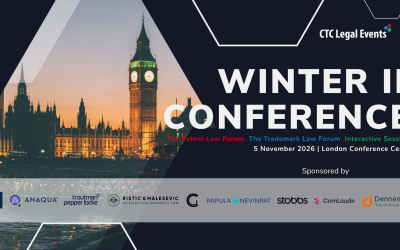
Winter IP Conference 2026: 5 November, London UK
After two highly successful and well-regarded annual events, we’re thrilled to announce the Winter Intellectual...
Amazon flags potential abuse of mass trademark infringement lawsuits
Retailer seeks to pause court-ordered fund transfers as it investigates whether Schedule A litigation was used to...

Detentions of counterfeit goods in the EU reached an all-time high in 2025
Over 196 million counterfeit items worth an estimated EUR 6.3 billion were detained in the EU in 2025, according to a...
Contact us to write for out Newsletter