

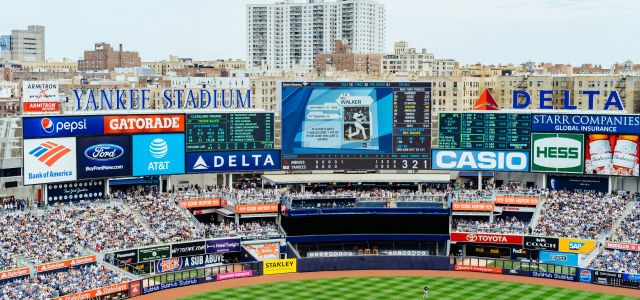
Ambush marketing—when a brand attempts to associate itself with an event without paying to become an official sponsor—might seem like a clever strategy to capitalize on collective fanfare, signal brand alignment, and gain coveted exposure, without paying the premium official sponsorship commands. However, the legal risks are substantial and warrant careful consideration.
The appeal of ambush marketing is self-evident. The average sponsorship for the Super Bowl carries a price tag of roughly $40 million, NCAA March Madness $7 million to $50 million, and the Olympics $50 million to $500 million. But these high-dollar placements derive and retain value through exclusivity based on a robust system of laws, regulations, and enforcement mechanisms that establish and protect intellectual property ownership and licensing rights. Accordingly, ambush marketing tactics present meaningful risks of legal liability.
Ambush marketing may run afoul of both state and federal intellectual property laws—particularly those governing trademark rights, false advertising, and false association—as well as event-specific rules and regulations designed to protect organizers and their official sponsors from unauthorized marketing activity. Most pertinent are the rights conferred by the Lanham Act to owners of federally registered and unregistered trademarks, including the right to grant licenses to third parties, exclude others from unauthorized use, and to pursue claims for, inter alia, trademark infringement, dilution, and false advertising. Although these rights are not boundless, they establish a crucial baseline to prevent direct ambush marketing, that is, when, without authorization, a brand uses a trademarked designation of the event, organizing body, or official sponsors, which usually gives rise to infringement liability, subject only to narrow defenses, such as nominative fair use.
Because of the obvious risks arising from unauthorized use of third-party marks, ambush marketing is more often indirect, attempting to avoid trademark infringement liability by implying an association between the ambushing brand and the event without explicitly using any trademarks of the event, the organizing body, or its sponsors. This approach prompts audiences to draw the desired inference through strategic ad timing, physical proximity to event venues, product placement or gifting, or evocative, though not explicit, references to the event or its affiliates, e.g., “the Big Game” or “the March Tournament.” In most jurisdictions, these techniques make it more difficult for owners and event organizers to combat these references, but in the United States, they may be able to assert claims of false advertising, false designation of origin, trademark dilution, or tortious interference.
Several countries—South Africa, Brazil, and France, among them—have enacted strict anti-ambush marketing statutes. Such legislation is frequently prompted by a country’s selection to host an internationally prominent sporting event, such as the FIFA World Cup or the Olympic Games. The International Olympic Committee (“IOC”) is notorious in this regard, maintaining a comprehensive intellectual property portfolio and rigorously enforcing Rule 40 of the Olympic Charter. For each iteration of the Games, the IOC establishes “Key Principles” under Rule 40, which collectively govern athlete sponsorship and advertising activity surrounding the event, with enforcement delegated to the relevant National Olympic Committee. Additionally, as seen for the 2026 Milano Cortina Winter Olympic Games, the IOC issues “Illustrative Guidance” and “FAQs” explaining the applicable rules, which ban athletes and other participating individuals from associating with “Non-Olympic Partners”—i.e., all brands and organizations that lack an official Olympic sponsorship or licensing agreement.
Looking ahead, Mexican government organizations have indicated they are actively collaborating with FIFA to develop legal reforms targeting ambush marketing in connection with this summer’s World Cup, including the establishment of enforcement perimeters around event stadiums. FIFA has also issued its own “IP Guidelines” and parameters for “protecting the World Cup brand,” which expressly prohibit ambush marketing.
These event-driven regulatory frameworks underscore how the legal landscape governing ambush marketing is constantly evolving, particularly as event organizers and host countries implement new measures to combat ambush marketing. While traditional intellectual property laws continue to anchor legal liability for certain forms of ambush marketing, event organizers are promulgating—and advocating for—supplemental regulations to expand the range of actionable conduct, helping to protect the event brand and maintain the value of official sponsorships. For trademark practitioners, staying abreast of these evolving frameworks is essential to enforcing sponsorship rights and advising brands on the boundaries of permissible marketing activity.

Written by Michael Kelber
Partner and Chair of Neal Gerber Eisenberg’s Intellectual Property practice group

Written by Laurel Salisbury
Intellectual Property Associate at Neal Gerber Eisenberg
You may also like…

Winter IP Conference 2026: 5 November, London UK
After two highly successful and well-regarded annual events, we’re thrilled to announce the Winter Intellectual...

EU General Court rejects bad-faith and copyright challenge to lightoptics trademark
The ruling highlights the evidentiary burden on businesses seeking to invalidate an EU trademark based on earlier...

USA TODAY newspapers sue OpenAI for more than $250 million over AI training
The publishers allege that OpenAI used hundreds of thousands of articles without permission to train its AI models,...
Contact us to write for out Newsletter