
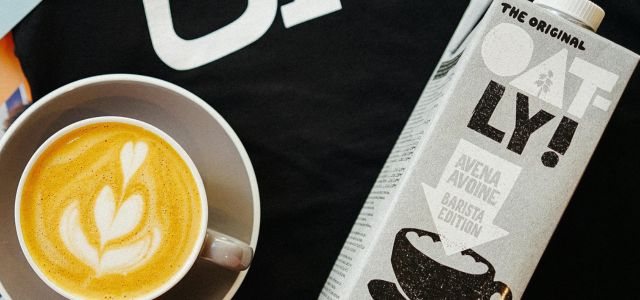
In a landmark judgment that provides definitive clarity on the protection of dairy designations in the UK, the Supreme Court has dismissed an appeal by Swedish oat-drink manufacturer Oatly AB, confirming the invalidation of its trademark for the phrase “Post Milk Generation.” The ruling, handed down on 11 February 2026, represents a significant victory for Dairy UK, the trade association for the UK dairy industry, which successfully argued that the term milk is legally reserved for animal-derived products.
The legal dispute: regulation and designation
The case centered on Section 3(4) of the Trade Marks Act 1994, which prohibits the registration of a trademark if its use is barred by any UK enactment or rule of law. At the heart of the litigation was Regulation (EU) No. 1308/2013 (now assimilated into UK law post-Brexit), which strictly protects dairy terms such as milk, cheese, and yogurt. Under this regulation, the designation milk is reserved exclusively for the mammary secretions of animals.
The legal battle hinged on the interpretation of the word designation within the regulation. Oatly contended for a narrow interpretation, arguing that designation should only apply to the specific name of a food or drink. Under this logic, Oatly suggested that since POST MILK GENERATION was a slogan or brand identifier rather than the product’s name, it should not fall under the prohibition.
However, the Supreme Court rejected this view in a unanimous decision, favoring a broader interpretation of designation. The Court held that the prohibition applies whenever protected dairy terms are used in respect of non-dairy products, regardless of whether they serve as the product’s formal name. This means the word milk cannot be incorporated into trademarks for any product that does not meet the animal-derived definition.
The failed fallback: descriptive exceptions
Failing its primary argument, Oatly presented a fallback position: that the phrase “Post Milk Generation” fell within a statutory exception allowing the use of protected terms if they clearly describe a characteristic quality of the product. Oatly argued the mark was a clear descriptor of its oat-based, dairy-free nature.
The Supreme Court dismissed this argument as well, ruling that the use of the term was not clear enough to satisfy the exception. The Court determined that “Post Milk Generation” was insufficiently clear to be categorized as a description of a characteristic quality of an oat-based drink.
Policy over consumer perception
Legal experts have noted that the decision was driven more by regulatory policy than by standard trademark principles. Kirsten Gilbert, Partner and Head of Brand Exploitation at Marks & Clerk, observed that the ruling was not based on consumer protection – the usual foundation of trademark law – but on a policy intended to “set out fair conditions of competition” by strictly protecting dairy terms.
This creates a notable disconnect between the law and modern consumer behavior. As Gilbert pointed out, consumers frequently use terms like “oat milk” or “soy milk,” yet producers are now legally restricted from using these phrases to communicate with their customers.
Practical implications for brand owners
The consequences for Oatly and the wider plant-based sector are immediate and far-reaching. Iain Connor, Intellectual Property Partner at Michelmores, explained that the decision implies Oatly must cease using the phrase on its products entirely. This restriction extends beyond the trademark registry to include product labels, publicity materials, and advertising.
For businesses in the dairy alternative sector, this ruling serves as a stark warning. “If your products are not dairy products, you will not be able to use the term milk in relation to your products,” Gilbert warned, adding that dairy companies now have a powerful tool to oppose future trademark applications from the non-dairy sector.
Industry reaction
The DWF team, led by Director Asima Rana, supported by Associate Jake Slinger and Tom Moody-Stuart KC, successfully advised Dairy UK throughout the appeal. Rana commented that the decision “brings welcome clarity” and provides greater certainty for those in the food and drink sector.
Judith Bryans, Chief Executive of Dairy UK, hailed the judgment as a reinforcement of long-established protections. “The Supreme Court’s decision […] ensures that [dairy terms] cannot be used inappropriately in ways that undermine fair competition,” she stated.
As the market for dairy alternatives continues to grow, this authoritative clarification ensures that the regulatory regime governing agricultural designations remains a formidable barrier for brand owners looking to leverage traditional dairy terminology in their marketing and intellectual property strategies.

Written by Elizabeth Jordan
Editor-in-Chief, The Trademark Lawyer Magazine
You may also like…

Elvis and Eminem rights holders launch fresh copyright attack on AI music generator Suno
Rights holders connected to Elvis Presley and Eminem have filed separate copyright infringement lawsuits against AI...
Designers to get stronger and simpler protection in major reforms
Changes will help smaller businesses safeguard their work and modernize design protection The Government has announced...
Anand and Anand successfully represents The Boeing Company in trademark opposition against “RK BOEING”
New Delhi, November 5, 2026 - Anand and Anand has successfully represented The Boeing Company in opposition...
Contact us to write for out Newsletter