

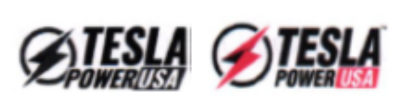
The Delhi High Court delivered a significant judgment on November 24, 2025, in the case of Tesla Inc. v. Tesla Power India Private Limited & Ors. (CS(COMM) 353/2024). The case involves a dispute over trademark infringement and passing off between Tesla Inc. (Plaintiff) and Tesla Power India Private Limited (Defendants) over the use of the marks’ TESLA POWER, TESLA POWER USA, and logos (see below), including the domain names www.teslapowerusa.com, www.Teslapowersusa.in, www.Teslapowerusa.ae, and www.Teslahealthylife.com.
Plaintiff (Tesla Inc.) submissions
Overview of Plaintiff’s business and trademark
Tesla Inc. is a multinational corporation engaged in the design, development, manufacture, and sale of high-performance electric vehicles, battery products, solar roofs, energy generation and storage systems, solar panels, and other innovative products and services. The Plaintiff adopted the trademark TESLA in 2003, and it has been continuously used since July 2006. The distinctive ‘T‘ logo (“T Logo”) was adopted in 2006 and has been extensively used since then.
Trademark registration and reputation
The Plaintiff holds registrations for the TESLA mark, both worldwide and in India, and has generated significant revenues and established substantial goodwill & reputation, both globally and in India. Further, the Plaintiff’s registrations predate the Defendants’ alleged adoption and first use of the mark TESLA. Further, the Plaintiff has shown direct use of the mark TESLA on goods in India since 2010, as pleaded in the suit and supported by documents, including the decision of the learned Registrar of Trademarks holding that the Plaintiff has a worldwide reputation.
Alleged infringement and passing off by Defendants
The Defendants have engaged in acts of trademark infringement and passing off by using and applying for the marks TESLA POWER and TESLA POWER USA (bearing Nos. 4855017 and 4855802 in Class 9 in India). These marks wholly incorporate the Plaintiff’s trademark as their dominant element, and the addition of descriptive terms ‘POWER‘ and ‘USA‘ to ‘TESLA‘ does not sufficiently distinguish the Defendants’ marks from the Plaintiff’s or help the case of the Defendants, considering ‘TESLA‘ is the dominant part of the impugned trademarks. Further, the Defendant has taken a contradictory stance regarding the adoption of the mark TESLA in their defence.
Evidence of actual confusion and legal actions
The actual confusion among the public arose when the Defendants announced their entry into the electric vehicle business, as reported in Business Standard in December 2021. In response, the Plaintiff issued a cease-and-desist notice on April 18, 2022, requesting that the Defendants cease using the impugned trademarks and withdraw their applications. In subsequent correspondence, the Defendants claimed that ‘TESLA‘ was adopted as an acronym for their business model (“The Energy Storage on Leased Assets”). Despite this, confusion persisted, as evidenced by notices from the Government of India to the Plaintiff and media articles regarding orders for inverters and charging stations by the Plaintiff’s Indian subsidiary.
The Defendants have not been able to refute the instances of actual confusion caused in the minds of the media or the complaints received by the Plaintiff, which were actually against the Defendants. Thus, the Plaintiff has established several instances in which the use of the impugned trademarks has caused confusion among the public.
Defendants’ continued use and Plaintiff’s legal response
In March 2023, the Defendants published a full-page advertisement in the Times of India announcing the launch of a new range of electric two-wheelers using “American Technology“ and claiming a “PAN India sales & Service Network.“ This compelled the Plaintiff to initiate the present suit. Despite providing an undertaking at the first hearing on May 2, 2024, the Defendants continued to use and sell electric scooters bearing the impugned marks, advertise EVs on their website, and publish/advertise EVs under the impugned trademarks in national newspapers and online.
Lack of evidence for commonality and Plaintiff’s goodwill
The Defendants have not produced any evidence to show that ‘TESLA‘ was common to trade prior to the Plaintiff’s adoption. The Plaintiff is not expected to pursue every minor infringer. The Plaintiff enjoys enormous goodwill and a transborder reputation extending to India. The Defendants are aware of the Plaintiff, its marks, and its CEO, Elon Musk. Further, the Defendants’ submission that the word ‘TESLA‘ is inspired by Nikola Tesla does not mitigate the mark’s distinctive and well-known character.
Regarding the Defendant’s argument that other third-party entities are using the mark TESLA, and that the same being common to trade is not available to the Defendants, as the Defendants themselves have applied to register the mark TESLA POWER and the logo (see below), the Defendants are not allowed to approbate and reprobate. The use of the mark TESLA by third-party entities, as cited by the Defendants, is either not in use, such entities are liquidated, or such use is subsequent to the Plaintiff. The Defendants have failed to show that such alleged third-party use of the mark TESLA is common to trade or is substantial.
The delay in filing cases of trademark infringement and passing off is not a ground for refusal of an interim injunction, as held in Midas Hygiene Industries (P) Ltd. and Another v. Sudhir Bhatia and Others, 2004 SCC Online SC 106, and Hindustan Pencils Pvt. Lts. v. India Stationery Products, 1989 SCC Online Del 34).
Defendants’ (Tesla Power India) submissions
Honest and bona fide use
The Defendants claim their use of the marks TESLA POWER and TESLA POWER USA for Class 09 products (lead-acid batteries, inverters, UPS, etc.) has been honest, bona fide, and commenced in 2020.
Good faith adoption inspired by Nikola Tesla
They assert that the adoption of the marks was inspired by the scientist Nikola Tesla and was made in good faith, not to mislead or infringe. Further, a comparison of the Plaintiff’s trademarks and the impugned trademarks clearly shows that the competing marks are visually, structurally, and phonetically dissimilar.
No exclusive rights over TESLA
The Plaintiff has falsely claimed that the mark TESLA is not common to trade, and the Defendants have provided an exhaustive list of third parties using the word and device mark. Further, TESLA is a common family name of the famous scientist Nikola Tesla, and no single entity, including the Plaintiff, can claim exclusive rights over it.
Prior use and crowded market
The Plaintiff is not the prior user, adopter, or registrant of the Plaintiff’s trademarks. Various third parties used the mark TESLA prior to the Plaintiff. Thus, the Plaintiff cannot claim that the mark TESLA is exclusively associated with the Plaintiff.
They contend that various third parties have used or registered the mark TESLA prior to the Plaintiff, resulting in a crowded market and undermining the Plaintiff’s claim to exclusivity.
Plaintiff’s minimal use and lack of reputation in India
The Plaintiff has relied on a single promotion conducted in 2010 to establish actual use of its trademarks in India. Defendants maintain that the Plaintiff’s use of the mark in India has been casual, intermittent, and experimental to establish reputation or secondary meaning and cannot be relied upon to establish a user claim. They argue that the Plaintiff has not commenced substantive use of the TESLA marks in India.
Distinct goods and trade channels
Defendant asserts that its products (lead-acid batteries and inverters) are fundamentally different from Tesla Inc.’s electric vehicles and battery products, with distinct trade channels and customer bases. Batteries, they argue, do not constitute structural automobile parts under Class 12. Further, the electric battery system is completely different from Lead Acid Batteries and has completely distinct trade channels and customers.
Undertakings and limited use
The Defendants have given an undertaking that they will use the impugned trademarks only with respect to Lead Acid Batteries before this Court on 02.05.2025 and 08.09.2025. Therefore, the claim of the Plaintiff that the Defendants have taken a contrary stand is unsubstantiated.
Delay in filing suit
They point out a delay of over two years in the Plaintiff’s filing of the suit, during which their business has grown substantially.
Dissimilarity of marks
Defendants argue that the Plaintiff’s trademarks and the impugned marks are visually, structurally, and phonetically dissimilar.
Court’s analysis
The Court has analysed the case based on the following parameters:
- Infringement of Plaintiff’s trademarks: The Plaintiff’s trademarks are subsisting on the Register of Trademarks. The Defendant cannot contend that the Plaintiff lacks the right to protect its trademarks. As the Plaintiff’s trademark registrations in Class 09 cover Inverters, the Defendants’ use of the impugned trademarks for Inverters is clearly an infringement.
- Goodwill and reputation: The Plaintiff has demonstrated the goodwill and reputation of its trademarks in India and worldwide through significant revenue, promotion in leading national newspapers, and the popularity of the Plaintiff’s CEO. Accordingly, the use of the impugned trademarks is prima facie dishonest and appears to be an attempt to ride on the goodwill and reputation of the Plaintiff’s trademarks.
- Likelihood of confusion: The Plaintiff has shown instances of actual confusion in the minds of ordinary consumers and reputable media houses that published news, believing the Defendants were in fact related to the Plaintiff. The addition of descriptive terms like ‘USA‘ and ‘POWER‘ is not enough to distinguish the goods and services of the Defendants from those of the Plaintiff. A consumer of average intelligence and imperfect recollection would be unable to distinguish between the competing products.
- Passing off: As the Plaintiff has shown substantial goodwill for the goods and services under the mark TESLA through revenue earned, media coverage, and has demonstrated actual instances of confusion, the Plaintiff is likely to suffer loss of reputation if the goods and services of the Defendants are allowed to pass off as those of the Plaintiff.
- Delay in filing suit: Merely a delay in seeking the remedy of an injunction cannot be a ground to deny an injunction to the Plaintiff, as held in the case of Midas Hygiene and Hindustan Pencils.
- Contradictory reasons for the adoption of impugned marks by Defendants: The contradictory reasons given by the Defendant for adopting the mark TESLA do not inspire confidence, and, prima facie, the adoption appears to be dishonest, with the intent to benefit from the goodwill and reputation of the Plaintiff’s trademarks.
- Generic and common to trade: The use of the mark TESLA as a common trade name is not available to the Defendants, as they have themselves applied for registration of the impugned trademarks. The Defendants are not allowed to approbate and reprobate and take contrary stands. The mark TESLA in the EV and battery segment is linked exclusively to the Plaintiff and is not common to trade.
- Third-party use: The Defendant’s argument that the Plaintiff has co-existed with several other parties and marks worldwide, including in India, is misconceived. The Defendant has failed to show that the facts of the present case apply to any other third-party entity, as none of the cited marks containing the mark TESLA are used for batteries, automobiles, or EVs in India.
- Non-use of Plaintiff’s trademarks: The Plaintiff has used the TESLA marks abroad, because of which the TESLA marks have acquired secondary meaning, and the reputation of the Plaintiff has travelled to India as well. The Court relied on the case of Toyota Jidosha Kabushiki Kaisha, Columbia Sportswear Company, Trustees of Princeton University, and Century 21 Real Estate LLC.
- Prominent feature test: The dominant feature of the Plaintiff’s trademarks and the Defendant’s trademarks, i.e., TESLA, is identical. Applying the dominant feature test, a prima facie case of infringement is made out against the Defendant.
Decision
Based on the submissions of both sides, the Court noted that the Plaintiff’s trademarks and the impugned trademarks are identical, that the product category is identical, and that the trade channel and consumer base are identical. Thus, a prima facie case has been made out on behalf of the Plaintiff for the grant of an interim injunction. Accordingly, the Defendant is directed not to manufacture, market, or promote advertisements in relation to EV vehicles under the trademark TESLA POWER, TESLA POWER USA, or the logos (see below) until the final disposal of the suit.

Written by Ranjan Narula
Managing Partner, RNA, Technology and IP Attorneys

Written by Eeshani Sharma
Managing Associate, RNA, Technology and IP Attorneys
You may also like…

Winter IP Conference 2026: 5 November, London UK
After two highly successful and well-regarded annual events, we’re thrilled to announce the Winter Intellectual...

Columbia Pictures loses EU trademark challenge to GHOST BUSTER mark
The Ghostbusters franchise owner has reportedly failed to block a Dutch inventor’s trademark for lighting products,...
How AI is transforming IP docketing
Every patent and trademark ultimately hinges on a calendar. Miss a critical deadline, and an invaluable asset can...
Contact us to write for out Newsletter