

Jukka Immonen, Director, Pharma Propositions at Corsearch, calls for greater strategic clarity in a saturated, AI-driven landscape.
Pharmaceutical brand naming has quickly become a high-stakes challenge as trademark professionals compete to file strategically, avoid unnecessary costs, and accelerate speed to market. It is no longer a linear, siloed process for generating and clearing names. Instead, it is complex and multi-dimensional, shaped by trademark saturation, increasing regulatory scrutiny, and the growing role of artificial intelligence.
Class 5 filings accelerated globally by 11% in 2025, from over 651,000 to more than 712,000. This was fueled partly by the explosive growth of the health and wellness industry. Filings increased most notably in the US, rising by as much as 46%, whilst the UK saw a 27% increase and the European Union, 18%.
IP and brand professionals must now navigate the uncertainty through integrated, data-informed decision-making. Indeed, by listening to pharmaceutical IP leaders, Corsearch reports that there is a clear consensus that a more coordinated, technology-enabled, and strategically aligned approach is now essential.
Saturation is reshaping the naming landscape
One of the most pressing challenges facing pharmaceutical naming teams is the sheer growth in trademark activity. An 11% rise in Class 5 trademark filings has intensified an already crowded landscape, significantly reducing the pool of viable, globally clearable names.
This means teams are encountering fewer acceptable candidates and longer clearance cycles. As organizations operate under pressure to accelerate time-to-market, saturation is impacting daily operations and needs to be addressed from day one.
Regulatory review is sophisticated but unpredictable
Meanwhile, regulatory scrutiny is evolving as global health authorities, including the US Food and Drug Administration (FDA) and the European Medicines Agency (EMA), apply increasingly sophisticated frameworks to assess the safety of proposed drug names. Of course, these frameworks improve rigor, but for IP and branding teams, they can also increase uncertainty.
A key challenge highlighted by pharmaceutical IP leaders was the persistence of late-stage objections. Even after extensive trademark clearance and internal vetting, regulatory concerns can emerge late in the approval process, forcing costly delays or rebranding. To help avoid this, trademark clearance and regulatory strategy need to align from the earliest stages of name development, with regulatory risk evaluated alongside trademark viability.
AI is accelerating workflows, not replacing judgment
Artificial intelligence is now firmly embedded in pharmaceutical naming workflows, enabling rapid analysis of linguistic similarity, global trademark databases, and regulatory data, significantly accelerating early-stage screening. This allows teams to streamline workflows and identify potential conflicts earlier than ever before.
However, AI cannot replace human judgment. Class 5 filings can be unusually sensitive to wording and lawful-use issues, often requiring more careful wording and diligent legal review. Naming decisions will always need nuanced human evaluation of strategic fit, brand differentiation, and regulatory sensitivity. AI can surface patterns and flag risks, but it cannot fully interpret the broader implications of a name in a complex, global market. Technology accelerates the process, but final decision-making authority remains firmly with experienced professionals.
Global naming requires multilingual precision
The drive to secure a single global brand name continues to drive naming strategy, although achieving it can be difficult. After all, trademark examination standards vary widely across jurisdictions, and regulatory bodies have different assessment criteria, creating another potential block for a product’s “single global name”. Linguistic interpretation also introduces additional complexity, as a name that is viable in one market can present risks in another due to phonetic similarity, meaning, or cultural context.
The importance of addressing non-Latin scripts, including Cyrillic, Chinese, and Japanese scripts, early in the process is vital, as any delay might lead to costly setbacks, from late-stage conflicts to rebranding. Early integration of linguistic and regulatory factors across key markets is needed upfront, rather than retrofitting solutions later in development.
Integration is key to success
One of the most significant factors voiced by pharmaceutical IP leaders is the move away from siloed workflows. Historically, trademark clearance, regulatory review and patent considerations have often been handled independently and sequentially. However, this model is proving increasingly inefficient and risky in today’s naming landscape.
Leading organizations are now adopting more integrated approaches, bringing together IP teams, regulatory specialists, and brand strategists from day one of name development. This cross-functional collaboration enables faster identification of risks, more informed decision-making, and greater alignment across stakeholders.
Managing expectations in an AI-driven environment
As technology advances, business stakeholders often expect AI and modern tools to dramatically shorten the naming process. While AI can accelerate many workflow activities and improve the quality and consistency of analysis, it cannot replace the expert judgment needed to navigate trademark saturation, regulatory scrutiny, and global variability. IP professionals therefore play a critical role in helping leaders understand that, although AI can optimize parts of the process, successful pharmaceutical naming remains a complex and risk-sensitive exercise that requires human expertise.
Data will shape the next phase
Looking to the future, there is growing optimism about the potential for more advanced, data-driven approaches to pharmaceutical naming. AI systems could eventually integrate multiple data sources, including regulatory outcomes, trademark filings, and competitive intelligence, helping to improve predictive modeling for name approval. Despite positivity, realizing this vision will require something the industry has historically lacked – access to reliable, shared datasets.
Moving forward
Currently, the naming landscape is characterized by trademark saturation, evolving regulatory frameworks, and global linguistic challenges, leaving a more demanding environment than ever before.
While AI is transforming how teams approach early-stage analysis, it does not replace the need for strategic judgment and cross-functional collaboration. As pharmaceutical professionals prepare to bring their product to market, success will depend on building an integrated strategy from the start that aligns trademark, regulatory, and brand considerations in a single, coordinated process.

Written by Jukka Immonen
Director, Pharma Propositions at Corsearch
You may also like…
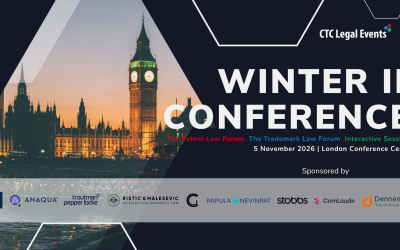
Winter IP Conference 2026: 5 November, London UK
After two highly successful and well-regarded annual events, we’re thrilled to announce the Winter Intellectual...

EU court rules UK JOULES trademarks could not support opposition after Brexit
The EU General Court has confirmed that UK trademark rights could no longer support an opposition to an EU trademark...

Japan court recognizes AI-cloned voices can fall under publicity-right protection
The Tokyo District Court has indicated that a person’s voice can fall within the scope of Japan’s publicity rights...
Contact us to write for out Newsletter