
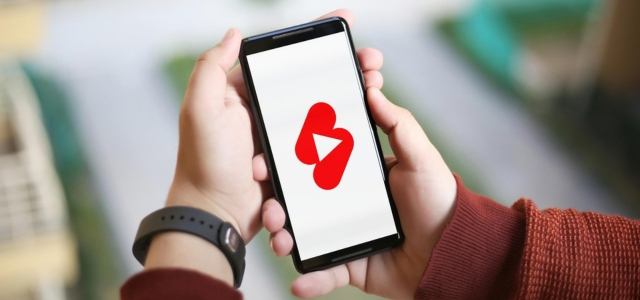
The UK Supreme Court has refused permission to appeal in a trademark dispute between Shorts International Ltd and Google LLC over Google’s use of “Shorts” for its YouTube Shorts service.
The Supreme Court refused permission on September 28, 2026, concluding that the application did not raise an arguable point of law. The Court’s online case record was subsequently updated on October 2.
The decision leaves standing the Court of Appeal’s May 2026 judgment, which upheld the High Court’s finding that Google’s use of “Shorts” did not infringe Shorts International’s registered trademarks.
Dispute over YouTube Shorts
Shorts International Ltd (SIL) is a producer and distributor of short films and operates the ShortsTV television channel. It owns five registered trademarks incorporating variations of SHORTS and SHORTSTV.
Four of the marks were registered in October 2018, while a further word mark for SHORTSTV was registered in December 2019.
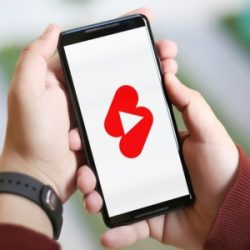
Google launched its YouTube Shorts service in the UK in 2021. The service is dedicated to short-form, user-generated video content, and Google uses “Shorts” both as part of the name “YouTube Shorts” and in various graphical and standalone forms.
SIL argued that Google’s use of the term infringed its registered trademarks, including under Section 10(2) of the Trade Marks Act 1994. Google denied infringement. It argued, among other things, that “shorts” was descriptive of short-form audiovisual content. Google also challenged the validity of SIL’s marks and sought revocation of some of them for non-use.
High Court found no likelihood of confusion
Following a seven-day trial, Michael Tappin KC, sitting as a Deputy Judge of the High Court, dismissed SIL’s infringement claim in a judgment handed down on October 31, 2024.
The judge found that the meaning of “shorts” had, at the relevant time, extended beyond “short films” to include other forms of short-form audiovisual content. He also found that SIL’s trademarks had low inherent distinctive character and that SIL’s use of them in the UK had not been extensive enough to enhance that distinctive character.
The High Court found that Google’s various uses of signs incorporating “shorts” did not create a likelihood of confusion as to origin. Although there were significant similarities between Google’s signs and SIL’s trademarks, those similarities concerned elements that were descriptive rather than the elements that gave SIL’s marks their distinctive character.
The High Court also found the word-only SHORTSTV mark invalid for most of the relevant goods and services, while the other marks retained protection because their overall combination of elements provided distinctive character. Some goods and services covered by the 2018 marks were also revoked for non-use.
Court of Appeal upheld decision
SIL appealed, challenging most of the High Court’s conclusions concerning validity and infringement. The Court of Appeal dismissed the appeal on May 25, 2026. It also dismissed Google’s cross-appeal, subject to the conclusions reached on the individual grounds.
A central issue was how the distinctive character of SIL’s marks should be taken into account when assessing the similarity between the marks and Google’s signs and, ultimately, the likelihood of confusion under Section 10(2). The Court of Appeal rejected SIL’s arguments concerning the treatment of the word “shorts.” It upheld the judge’s finding that, at the relevant time, the term extended beyond “short films” to encompass other short-form audiovisual content.
The Court also endorsed the High Court’s assessment of the marks’ distinctive character. In particular, the Court of Appeal noted that the word “shorts” and the play symbol were descriptive, while the distinctive character of SIL’s 2018 marks arose from the overall combination of their elements, including the way the play symbol was incorporated into the word mark.
The Court of Appeal described the High Court judge’s assessment of similarity as a “nuanced view of similarity” and held that applicable EU case law did not prohibit that approach.
Supreme Court refuses permission
SIL then sought permission to appeal to the Supreme Court. The proposed appeal raised a potentially important question of trademark law: how the distinctiveness of a mark should be considered when assessing the likelihood of confusion under Section 10(2) of the Trade Marks Act 1994. The Supreme Court has now declined to hear the appeal.
The application was considered by Lord Briggs, Lord Burrows and Lord Stephens on September 28. Their decision was simply that: “The application does not raise an arguable point of law.”
Permission to appeal was therefore refused. The Supreme Court’s refusal leaves the Court of Appeal’s judgment as the final appellate decision in the dispute.
Significance for trademark owners
The case provides a useful illustration of the difficulties that can arise when trademark protection is sought for, or infringement is alleged based on, a term that also has descriptive meaning in the relevant market.
Importantly, the courts did not treat Google’s use of the word “shorts” as automatically non-infringing simply because the term could be descriptive. The analysis considered how the term was used, the distinctive character of SIL’s marks and the overall impression created by the marks and Google’s signs.
The Court of Appeal emphasized that the distinctive character of SIL’s principal 2018 marks came from their overall combination of elements, rather than from the word “shorts” itself. Google’s signs did not reproduce that distinctive combination.
The case is therefore relevant to trademark owners whose marks incorporate words that may have descriptive meanings in the relevant sector. It also illustrates the importance of distinguishing between a sign’s descriptive elements and those elements that actually contribute to its distinctive character when assessing infringement.
With the Supreme Court declining permission to appeal, the litigation has now reached its end in the UK courts.
For clarity, however, the Supreme Court’s refusal was made on September 28, rather than October 2: October 2 is the date on which the Court’s online case record was last updated.
Written by Elizabeth Jordan
Senior Industry Engagement Manager, CTC Legal Media
You may also like…
Winter IP Conference 2026: 5 November, London UK
After two highly successful and well-regarded annual events, we’re thrilled to announce the Winter Intellectual...

EU court rules UK JOULES trademarks could not support opposition after Brexit
The EU General Court has confirmed that UK trademark rights could no longer support an opposition to an EU trademark...
Japan court recognizes AI-cloned voices can fall under publicity-right protection
The Tokyo District Court has indicated that a person’s voice can fall within the scope of Japan’s publicity rights...
Contact us to write for out Newsletter