
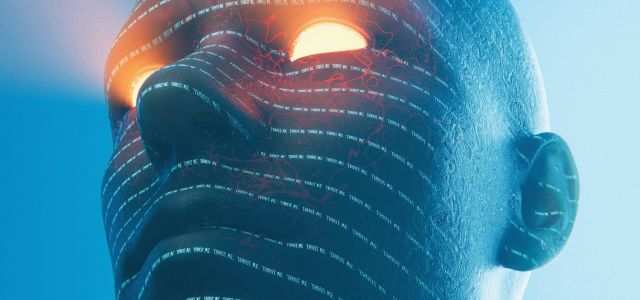
The sun comes up, and the internet is already working. An AI program also wakes up, stretches its digital limbs, and decides to launch a skincare brand. It picks a name — HEY YOUGloBae — that sounds essentially like an existing trademark, designs a logo in under five seconds, and writes a tagline so catchy it could make Madison Avenue weep and be a guest star on Mad Men.
So what? What could be the dilemma?
Well, the real HEYYOUGlowBae™ already exists — and its lawyers are not amused. But then again, lawyers really aren’t that amused unless they are clutching a judgment in their hand.
Now, back to the story – and welcome to the new frontier of brand identity theft, where the culprits aren’t human, but humanoid.
The era of digital doppelgängers
AI has now provided us with poetry-writing bots, self-driving cars, suggestions on things we don’t really need, and now — brand clones. Ranging from logos and taglines to entire product lines, AI can create convincing replicas faster than you can say “intellectual property.”
It’s not a late-night movie or science fiction anymore. You can cruise the headlines and news to find that small businesses have reported “AI twins” of their brands popping up on e-commerce platforms, complete with near-identical names, color palettes, and slogans.
One case related to a food delivery startup that found a duplicate app with the same UI, logo shape, and tagline — all courtesy of a generative design tool that “optimized” for engagement.
Translation: AI is impressive; it plagiarizes exquisitely.
Trademark law meets machine learning
With laws that date back to at least the last century, trademark regulations and law, noble and traditional as they are, were not exactly constructed for this.
The Lanham Act — the cornerstone of US trademark protection — predates floppy disks, let alone AI.
So, when an AI system or a platform inadvertently (or “algorithmically”) creates a confusingly similar mark, who is liable? Who do you “stop?”
- The AI? It lacks legal personhood.
- The developer or programmer? Hmmm… possibly.
- The company that deployed it? Well, look at some of the most common cases, almost certainly.
Therefore, one can conclude that intent is not really the factor – the baseline of trademark infringement is key here. It’s about likelihood of confusion, and, as things progress, bots are getting exceedingly good at being confusing.
What will this look like in a courtroom? Counsel may have to grapple with issues that relate to questions like:
- Can an AI infringe a mark if it has no intent?
- Is there “fair use” in machine learning training data?
- And can a bot respond to a subpoena, or just generate a sassy haiku about it?
The cease-and-de-systems era
With technological evolution comes a parallel enforcement of trademark rights. We’re seeing a new wave of “digital cease-and-desist” actions — programmed notices, algorithmic takedowns, and AI systems scanning for trademark violations.
While a bot sending cease-and-desist letters to other bots may seem far-fetched and even strange, it’s happening.
Moreover, you will also find that some brands have even started deploying defensive AIs that monitor marketplaces and social platforms for copycat designs, mimicking the infringers’ own methods.
The result is an all-out bot-on-bot legal battle.
Brands in the age of autonomy
As brand identity becomes increasingly automated, the line between originality and replication blurs. A marketing bot might not “mean” to infringe — it’s just pattern-matching based on millions of existing examples.
The result? Derivative design at a massive scale and a cat-and-mouse game of IP enforcement.
And for those that own brands, a legal nightmare in high definition.
Experts predict that within a few years, AI-generated trademarks will become commonplace. This could mean we find companies or individuals rushing to register names or slogans that their own algorithms came up with — to beat the clock on that moniker before someone else’s algorithm does.
So, as trademark lawyers, we need to prepare ourselves: The next big client might be a bot that wants to register its own brand.
Protection in the bot age
So, what can businesses do when their brand gets “AI’d”?
- Be nimble and quick. Protect your marks across categories and jurisdictions. Bots don’t respect borders — or sleep schedules.
- Monitor, monitor, and oh yeah, monitor. AI can replicate a brand overnight — or sooner. You may want to have one watching your back.
- Do stay human. A brand’s real value lies in authenticity — something machines can emulate but never truly own or, at their core, “be.”
Mess of AI or opportunity?
So, is the enemy technology? Most of us use that to order supplies and food, or just to do our work, but its capabilities are now expanding at an exponential rate.
AI is not the enemy. It’s a tool — one we can use to monitor, flag, and escalate faster than any human team could.
The smarter enforcement teams I work with are using AI for marketplace scanning, visual similarity detection, and social scraping, and good old human intervention to add to the fire.
But tech only works when your legal and marketing teams are aligned. The silos? That’s where the counterfeits thrive. In the age of automation, even identity isn’t safe from duplication. But while AI can copy a name, mimic a font, or replicate a slogan, it can’t reproduce the human creativity behind a brand’s soul. That is key, since the human and personal connection is what ensures brand survival.
Still, if you ever stumble across your brand’s robotic twin online, remember imitation may be algorithmic flattery — but in trademark law, it’s still infringement.
The playbook is changing — regardless of the law that is still dated and on the books. Thus, start early, stay visible, and remember: A brand that can’t defend itself isn’t a brand. It’s likely bait.
Disclaimer: The information contained in this article is solely for informational purposes only and does not constitute legal advice or form an attorney-client relationship between you and Belous Law Corporation in any manner and is not an offer to represent any party. All content is provided as is and may not be disseminated without written permission. The content of this article may be considered Attorney Advertising, as legally applicable.

Written by Relani Belous
Founding Partner, Belous Law Corp.

You may also like…
Winter IP Conference 2026: 5 November, London UK
After two highly successful and well-regarded annual events, we’re thrilled to announce the Winter Intellectual...

Japan’s Supreme Court rules copying unprotected works can still constitute a tort
Japan’s top court has upheld approximately JPY 169 million in damages against a website operator that reproduced and...
Columbia Pictures loses EU trademark challenge to GHOST BUSTER mark
The Ghostbusters franchise owner has reportedly failed to block a Dutch inventor’s trademark for lighting products,...
Contact us to write for out Newsletter